01 · Signal
Cells feel the pulse
The pressure wave deforms cell membranes and the matrix around them. Cells convert that mechanical input into biochemical signals through mechanotransduction.
d’Agostino et al., Muscles Ligaments Tendons J, 2016Now accepting a limited number of new patients each quarter · River Oaks, Houston
Reserve Your Assessment
StemWave® Focused Acoustic Wave Therapy
Focused acoustic waves delivered through the skin to the muscle, tendon and connective tissue where aches in the shoulders, back, hips, knees and feet tend to start. Sessions take about 10 to 15 minutes, with no needles, no anesthesia and no downtime, in River Oaks, Houston.

What It Is
Ice, pills and creams work on how pain feels. They do not change much about the tissue that is sending it. When an ache has lasted months, that tissue is often under-supplied with blood and stuck in a low-grade inflammatory loop it cannot finish on its own.
StemWave® is a focused acoustic wave device. Each pulse is formed in a sealed applicator and concentrated to a point beneath the skin, so energy is delivered at the depth of the problem rather than spent on the surface. Published research on focused shockwave describes what happens next: a mechanical signal the body reads as a reason to restart repair, with new circulation, calmer inflammation and quieter pain signaling.
At Valere it is never a stand-alone gadget. It sits inside your program, planned from your assessment and reviewed against where you started.
Plain Definitions
Focused acoustic wave
A short, high-pressure sound pulse shaped by a reflector so its energy peaks at a chosen depth inside tissue, not at the skin.
Focal zone
The small region where the pulse concentrates. Your clinician aims it at the tendon, muscle or joint tissue being treated.
Mechanotransduction
How cells turn a physical force into chemical instructions. It is the first step in everything the wave sets in motion.
Angiogenesis
The growth of new small blood vessels. More supply means more oxygen and nutrients reaching tissue that has been slow to recover.
The Science · Part One
Inside the applicator, a controlled spark fires between two electrodes in water. The vapor bubble it creates expands and collapses in a fraction of a microsecond, producing a pressure pulse. A curved reflector gathers that pulse and focuses it to a point inside the body, the same electrohydraulic principle medicine has used for decades to focus energy precisely.
Because the energy converges below the surface, the skin receives very little of it. The tissue in the focal zone receives the most.
Sources: StatPearls, NBK560887; van der Worp et al., Knee Surg Sports Traumatol Arthrosc, 2013.
The spark-gap pulse forming inside the applicator head. Animation supplied by StemWave®.
| Radial pressure wave Common in clinics and gyms | Focused (StemWave®) Electrohydraulic | |
|---|---|---|
| How it is made | A projectile driven by compressed air strikes the applicator. | A spark in water creates a pulse that a reflector focuses. |
| Where energy peaks | At the skin, then spreads and weakens with depth. | At a focal zone inside the tissue. |
| Wave shape | Slower rise; technically a pressure wave, not a shockwave. | Very fast rise, measured in billionths of a second. |
| What it is suited to | Broad, superficial areas. | Targeted tendon, ligament, muscle and joint-adjacent tissue. |
Rise-time comparison from van der Worp et al., 2013 (electrohydraulic focused devices, about 25 to 40 nanoseconds; radial device, about 600 nanoseconds). How these physical differences translate into results is still being studied.
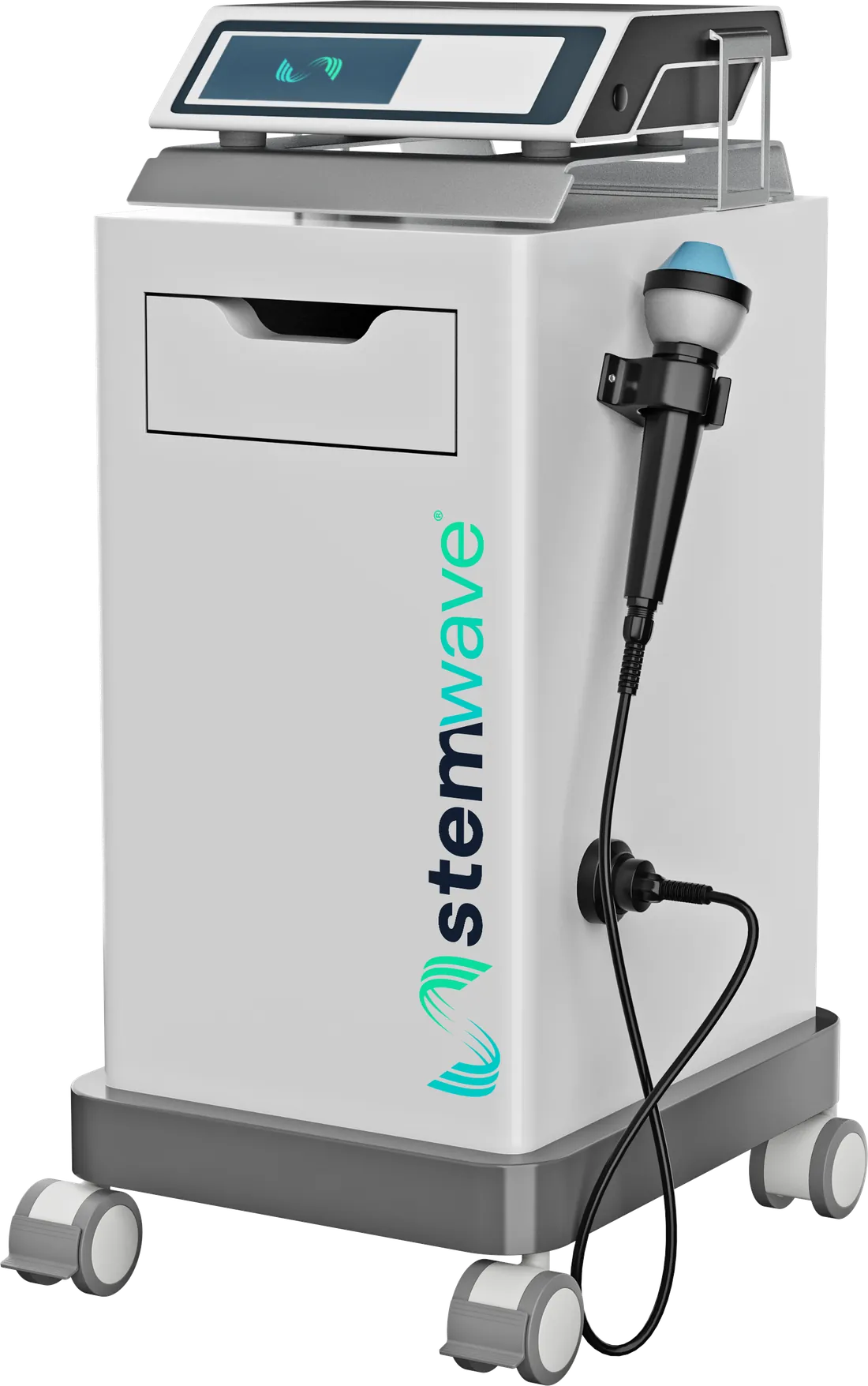
The System at Valere
Energy, pulse rate and pulse count are adjusted to the depth of the tissue, its density, and how it responds on the day. More pulses at gentler energy is the rule, not the exception.
Energy range
0.01–0.25 mJ/mm²
Pulse rate
1–4 per second
Session time
About 10–15 minutes
Comfort ceiling
No more than 3–4 of 10
The Science · Part Two
Researchers describe a cascade rather than a single effect. Much of it was mapped in laboratory and animal studies; the patient trials further down show what that looks like in practice.
01 · Signal
The pressure wave deforms cell membranes and the matrix around them. Cells convert that mechanical input into biochemical signals through mechanotransduction.
d’Agostino et al., Muscles Ligaments Tendons J, 201602 · Inflammation
In human immune cells, low-energy shockwaves dialed down inflammatory (M1) macrophage markers and boosted repair-type (M2) markers. Nitric oxide signaling also rises, which tempers inflammatory pathways.
Sukubo et al., Int J Surg, 2015; Ciampa et al., FEBS Lett, 200503 · Circulation
Growth signals for new vessels (eNOS and VEGF) rose within about a week of treatment, and new vessels were measurably increased from week four through week twelve.
Wang et al., J Orthop Res, 200304 · Repair
Shockwaves raised SDF-1, a chemical beacon that draws the body’s own progenitor cells to tissue, and increased the share of mesenchymal stem cells at the treated site. This is the “stem” in StemWave®: nothing is injected.
Aicher et al., Circulation, 2006; Chen et al., J Orthop Res, 200405 · Pain Signaling
Treated nerves carried less substance P and CGRP, two of the main chemical messengers that transmit and amplify pain.
Takahashi et al., Auton Neurosci, 2003; Hausdorf et al., Brain Res, 200806 · Cumulative
Relief from calmer inflammation can be felt early. The regenerative effects, new vessels and remodeled tissue, take weeks to develop. That is why care is planned as a series.
Wang, Chang Gung Med J, 2003Session one
Mapping and first relief
The tender area is located with the applicator itself. Some people notice a change in how a movement feels the same day; for others it takes a few sessions.
Weeks one to four
Inflammation settles
Twice-weekly sessions to start. Growth signals for new circulation are already elevated.
Weeks four and beyond
Tissue remodels
New vessels and repair activity continue to build. Progress is reviewed against your starting point.
See It Explained
Patient explainer produced by StemWave®, with subtitles. Patients shown are not Valere patients.
Where It Helps
Choose an area. Each one shows the concerns people most often bring to us, and the strongest published result we could verify for focused or radial shockwave therapy in that area, with the source linked. Where the evidence is mixed, we say so.
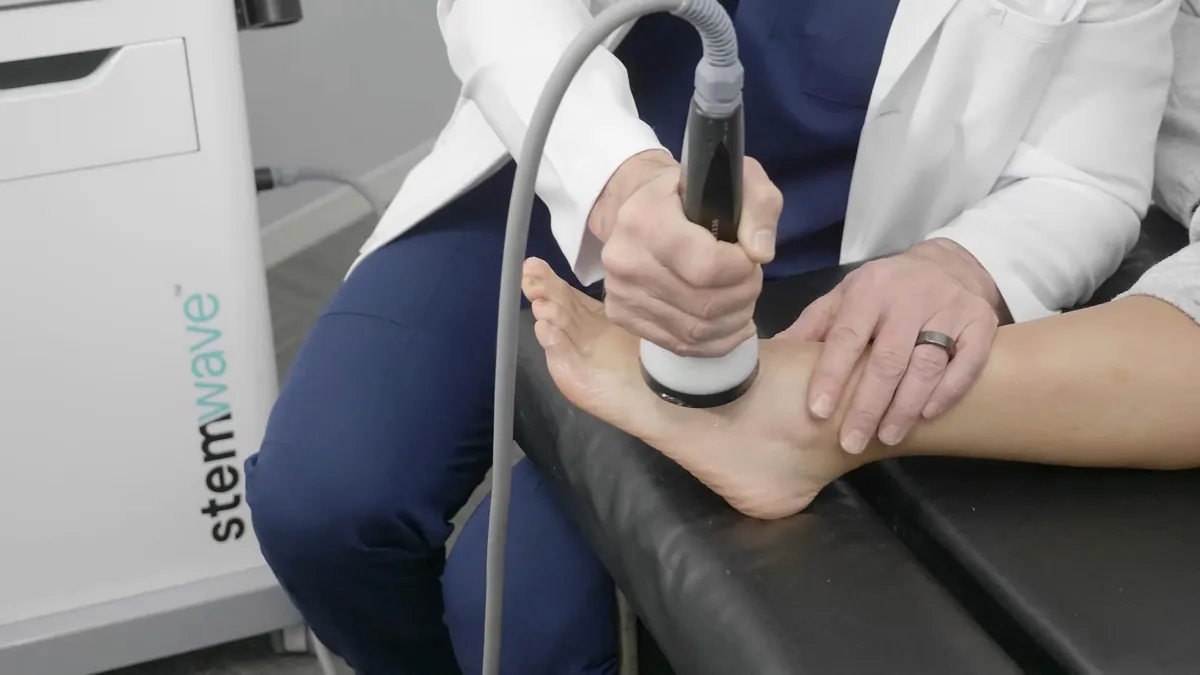
The most-studied use of shockwave therapy, and the one with the largest placebo-controlled trials. Most participants had heel pain for six months or longer that had not responded to other care.
69%vs35%
Focused shockwave vs placebo · 12 weeksMedian reduction in heel pain after three weekly sessions, in a placebo-controlled trial of 250 patients with long-standing heel pain.
Gollwitzer et al., J Bone Joint Surg Am, 2015 (industry-funded), summarized by American Family Physician. Sun et al., Medicine, 2017. Aqil et al., Clin Orthop Relat Res, 2013.
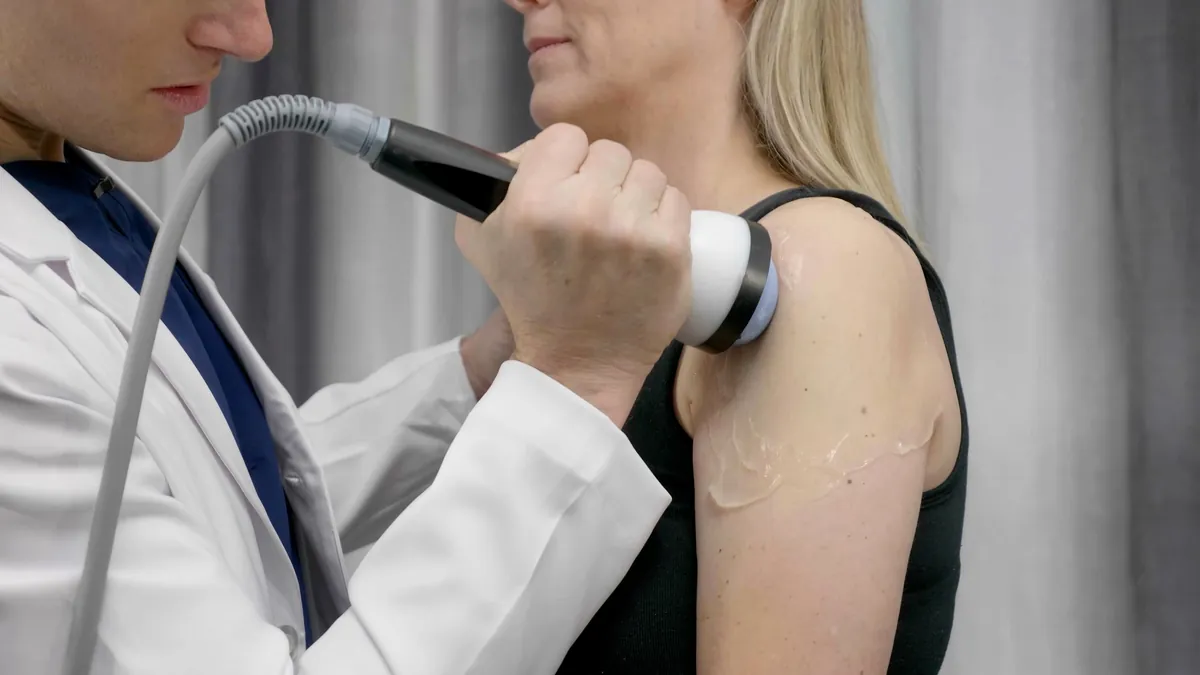
Strongest for calcium deposits in the rotator cuff tendons, where higher-energy focused treatment clearly outperformed both lower energy and sham. Results for shoulder pain without calcium deposits are encouraging but less certain.
+31vs+6.6
Shoulder function score · 6 monthsImprovement on the Constant-Murley scale with high-energy focused shockwave versus sham, in a randomized trial of 144 patients published in JAMA.
Gerdesmeyer et al., JAMA, 2003. Vavken et al., Sports Health, 2009.
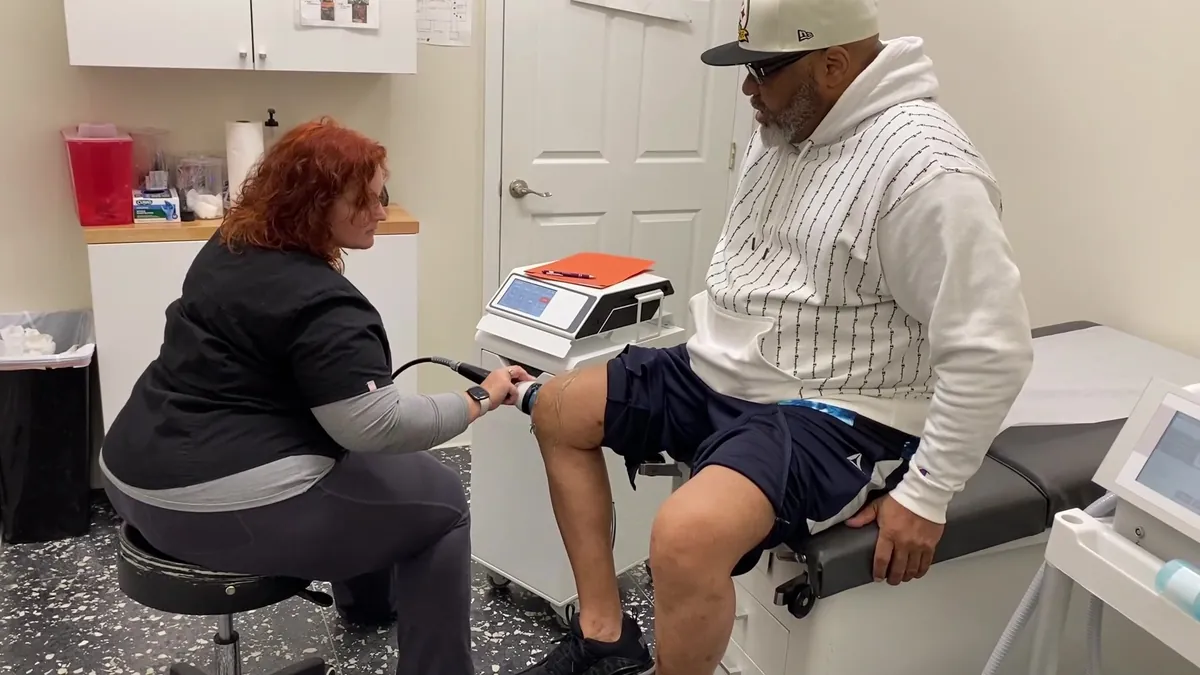
For knee osteoarthritis, multiple meta-analyses now agree that shockwave improves both pain and function. An umbrella review pooling them concluded it is an effective therapy for improving pain and function in knee arthritis.
−2.0
Pain score · pooled across meta-analysesAverage reduction on a 10-point pain scale compared with sham, pooled from four meta-analyses of randomized trials.
Umbrella review, 2024. Avendaño-Coy et al., Int J Surg, 2020. Zwerver et al., Am J Sports Med, 2011.
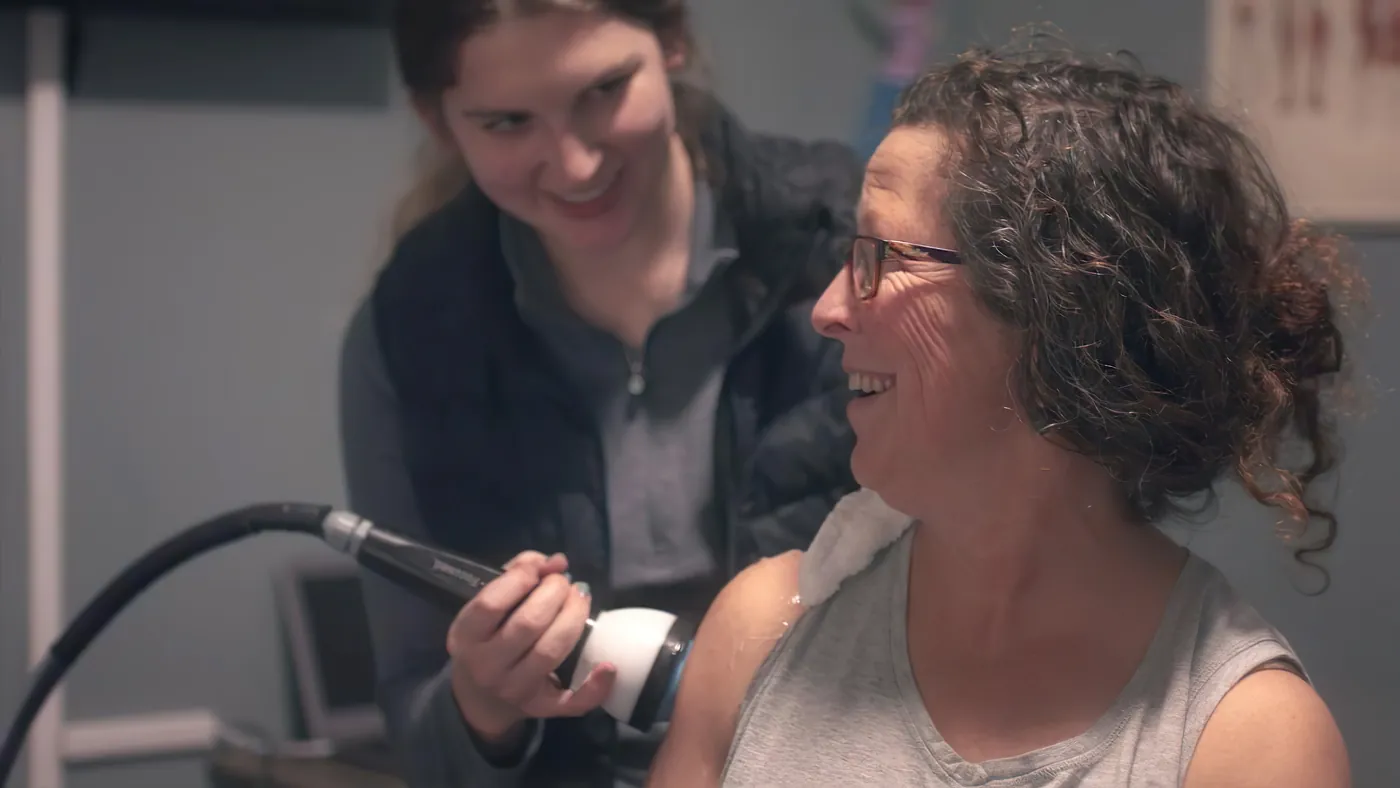
Pain on the outside of the hip responds well in published trials, and the benefit lasted longer than a steroid injection, which helped most at one month and least at fifteen months.
74%
Completely recovered or much improved · 15 monthsPatients treated with shockwave for outer hip pain, in a controlled trial of 229 patients comparing shockwave, home training and corticosteroid injection. 68% at four months.
Rompe et al., Am J Sports Med, 2009. JBJS Reviews meta-analysis, 2024.
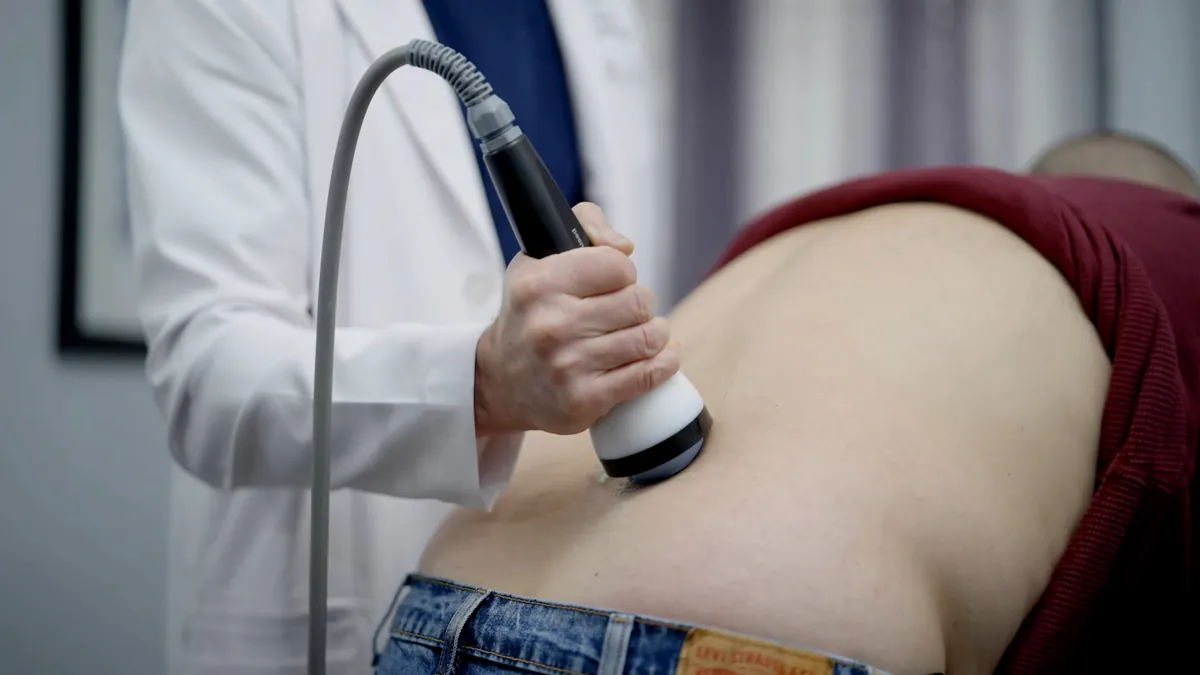
The low back is treated standing and leaning forward, never lying face down. In chronic, nonspecific low back pain, shockwave lowered both pain and disability in the short term.
3months
Lower disability scores, still measurableA meta-analysis of 10 randomized trials (455 patients) found lower pain at one month and lower disability at one and three months compared with control.
Yue et al., BioMed Res Int, 2021. Wu et al., Medicine, 2023.
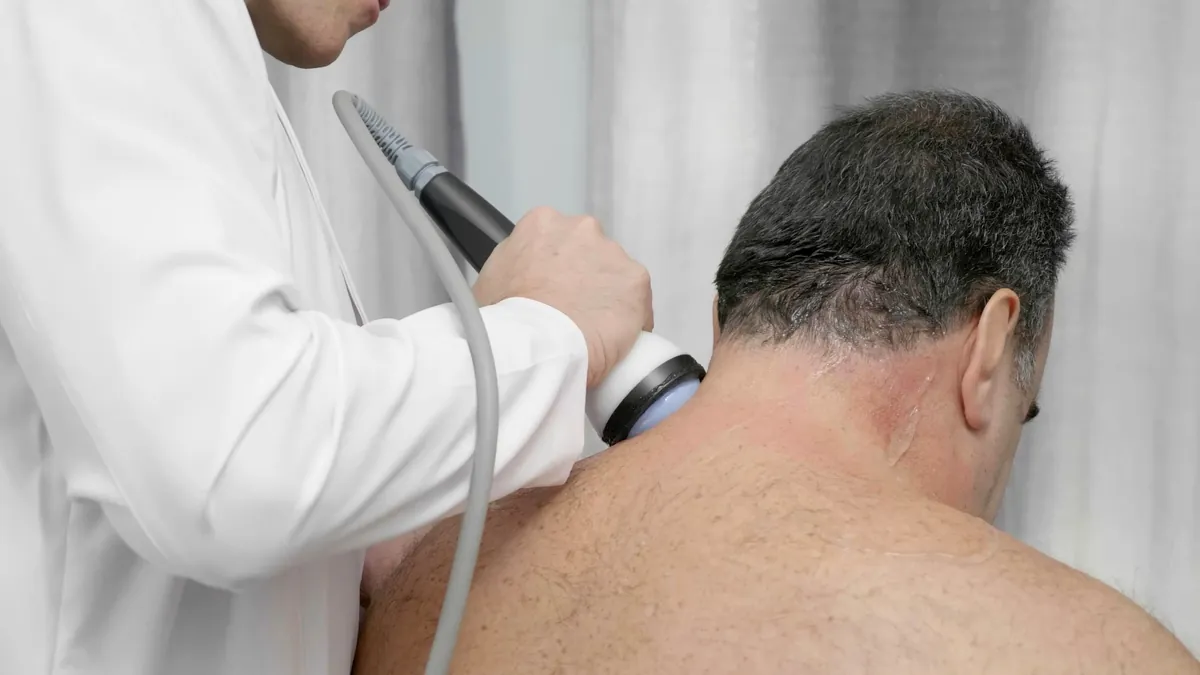
Trigger-point pain in the neck and upper back is one of the more common reasons people try shockwave. Treatment is seated and works from the mid-neck downward.
571
Patients · 8 studies pooledPain, pressure tolerance and neck disability all improved more with shockwave than with the comparison treatments, which included trigger point injection, dry needling and ultrasound.
Wu et al., Ann Transl Med, 2022. Avendaño-López et al., 2024.
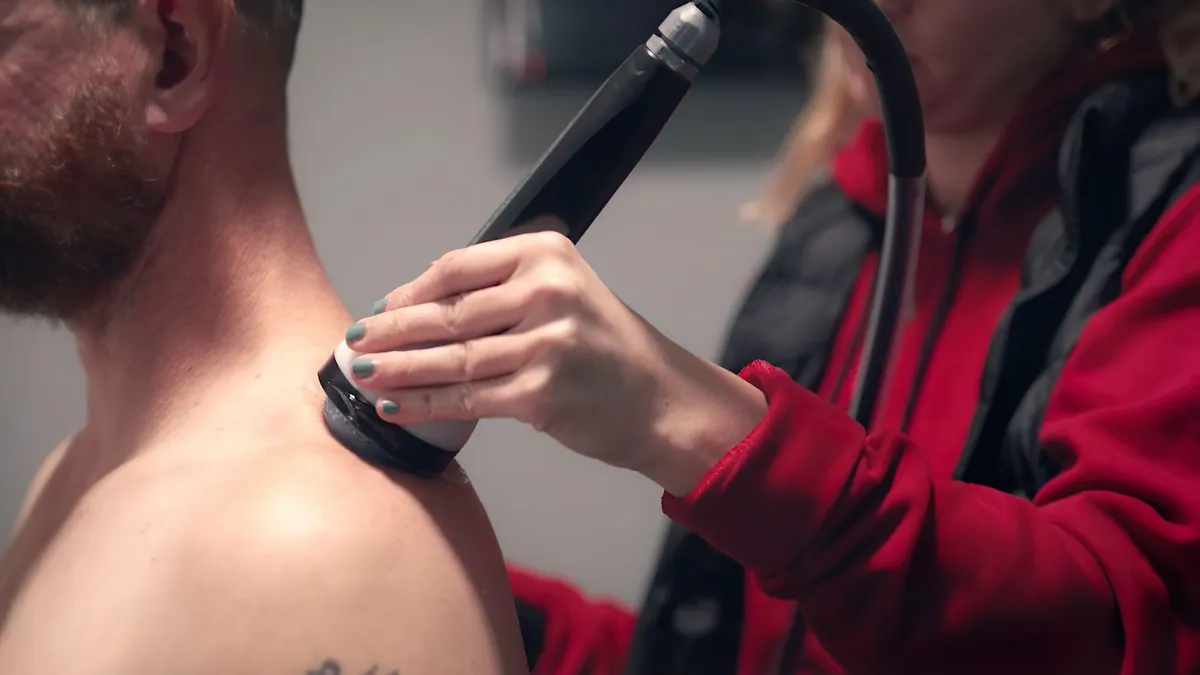
For chronic hamstring tendon pain at the sitting bone, one randomized trial in professional athletes produced one of the most striking results in the shockwave literature.
85%vs10%
At least 50% less pain · 3 monthsAthletes treated with shockwave versus conventional care (rest, medication and physical therapy), in a randomized trial of 40 professional athletes.
Cacchio et al., Am J Sports Med, 2011.
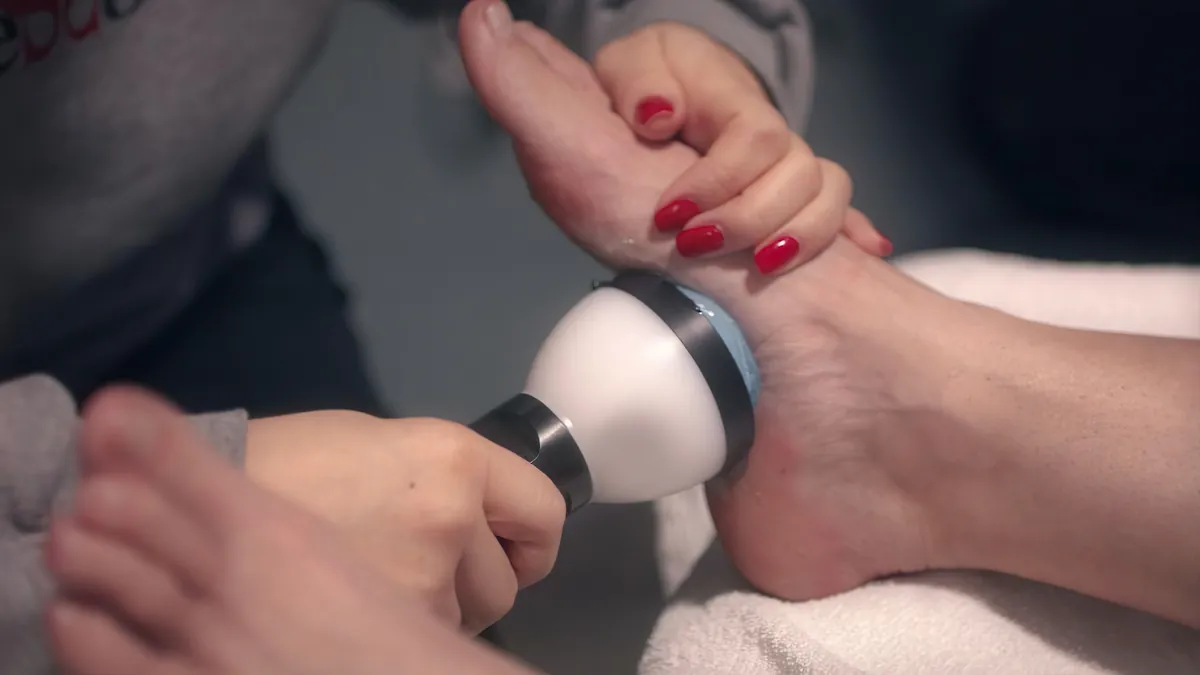
In a randomized trial, shockwave matched the gold-standard loading exercise program and more than doubled the success of waiting it out. Pooled sham-controlled results have been less consistent, so this is planned alongside loading work, not instead of it.
52%vs24%
Completely recovered or much improved · 4 monthsLow-energy shockwave versus a wait-and-see approach, in a randomized trial of 75 patients with chronic Achilles tendinopathy. Eccentric loading: 60%.
Rompe et al., Am J Sports Med, 2007. Ni et al., PeerJ, 2026.
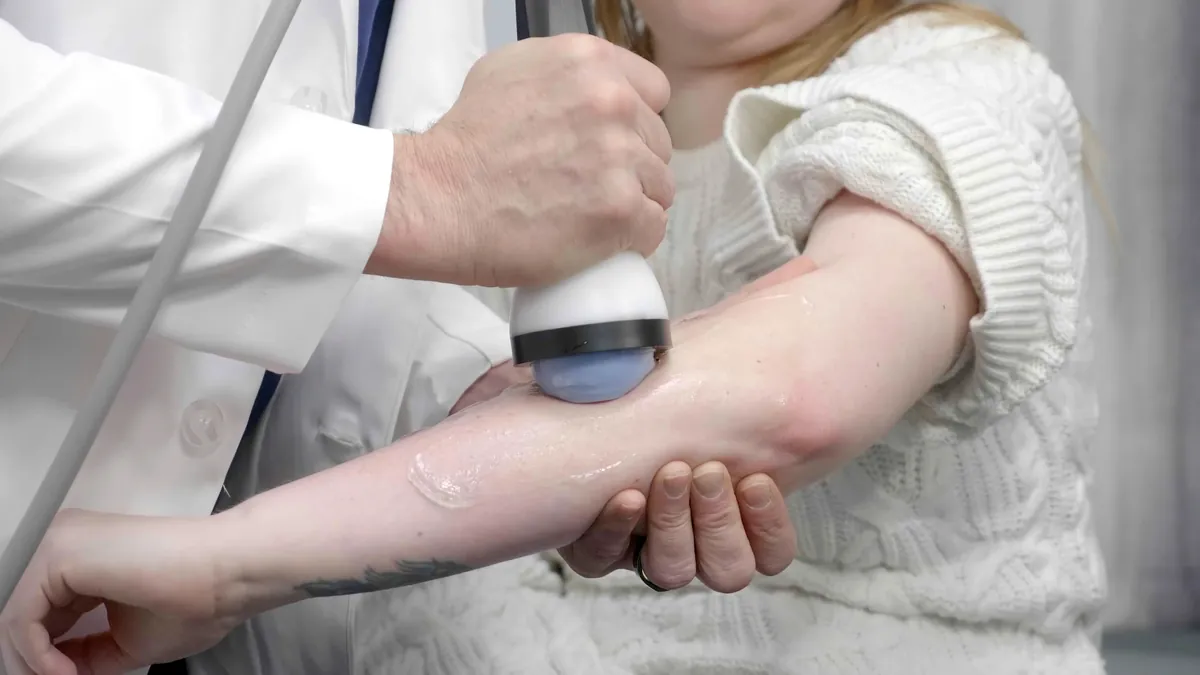
Tennis elbow is where the shockwave literature disagrees with itself. Under well-defined conditions, chronic cases treated weekly at low energy without anesthesia, results were strong. Across all trial designs, the picture is more modest.
65%vs28%
Treatment success vs placeboOne of two high-quality placebo-controlled trials (196 participants combined); the other reported 61% versus 29%.
Rompe & Maffulli, Br Med Bull, 2007. Buchbinder et al., Cochrane Review, 2005.
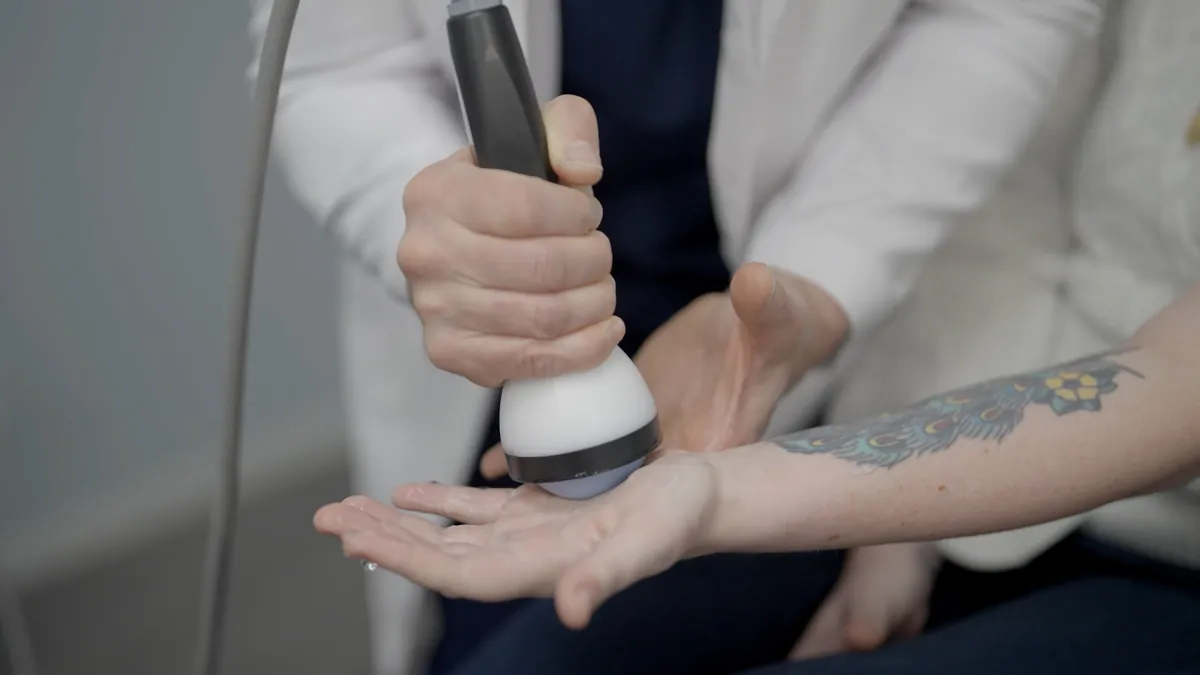
The wrist and hand are less-dense tissue, treated at gentler settings. The research here is thinner, and the gains reported so far have been earlier rather than lasting.
4weeks
When improvement was measuredIn carpal tunnel syndrome, a meta-analysis of seven randomized trials (376 participants) found better symptoms and function at four weeks, but not at later follow-ups.
Chen et al., Medicina, 2022.
The results above come from published studies of extracorporeal shockwave therapy across a range of devices and settings. They are not studies of the StemWave® device and are not Valere patient outcomes. They show what has been measured, not a promise of what you will experience. Individual results vary.
In the Moment
Unscripted reactions captured at other StemWave® practices, shared by StemWave®. Valerian stories will join them here, with consent, as they come in.
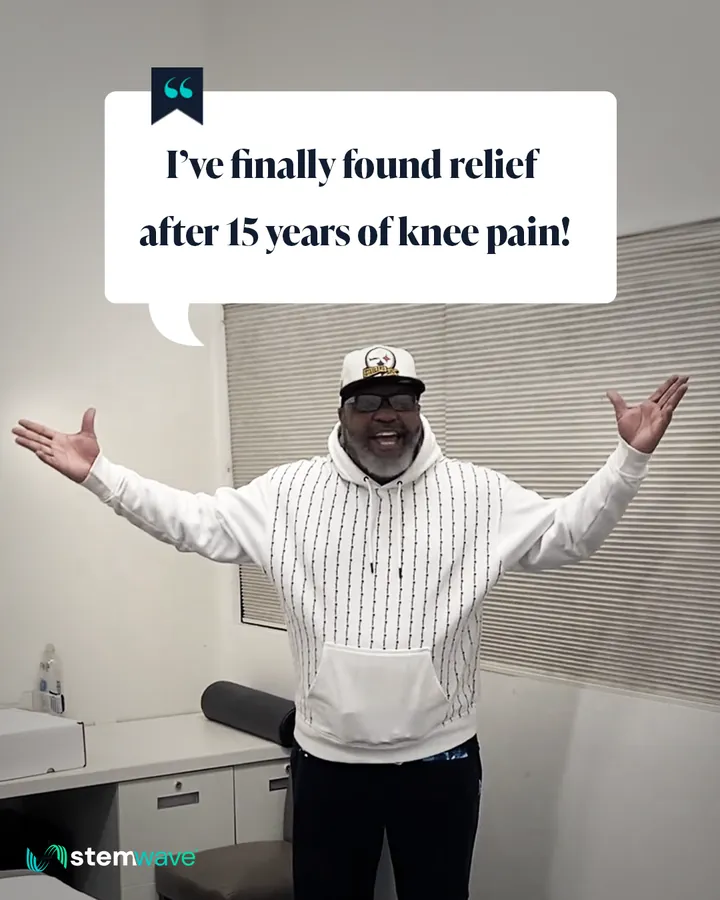
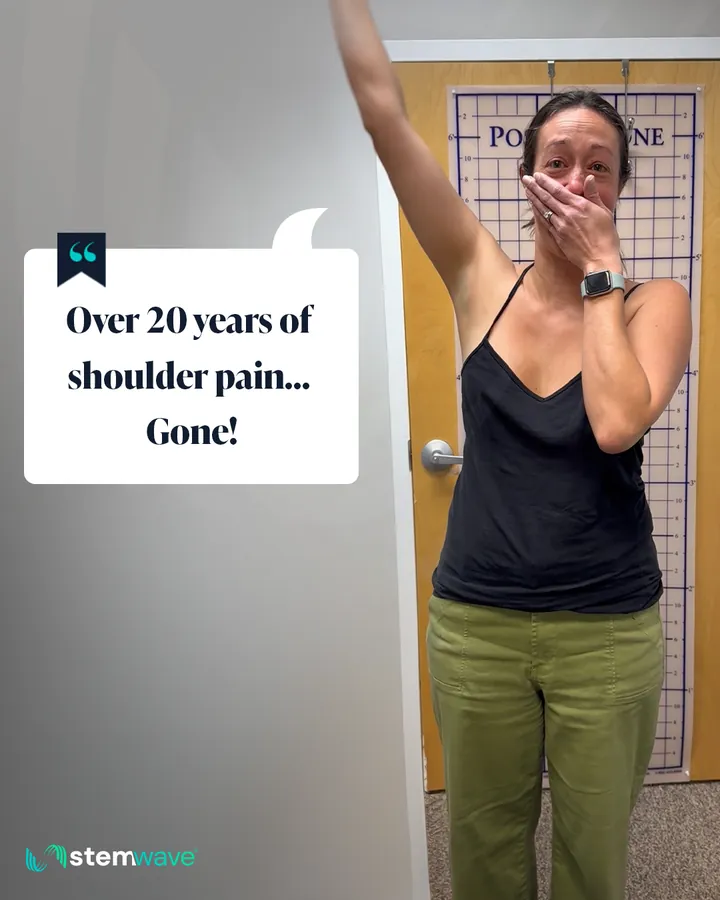
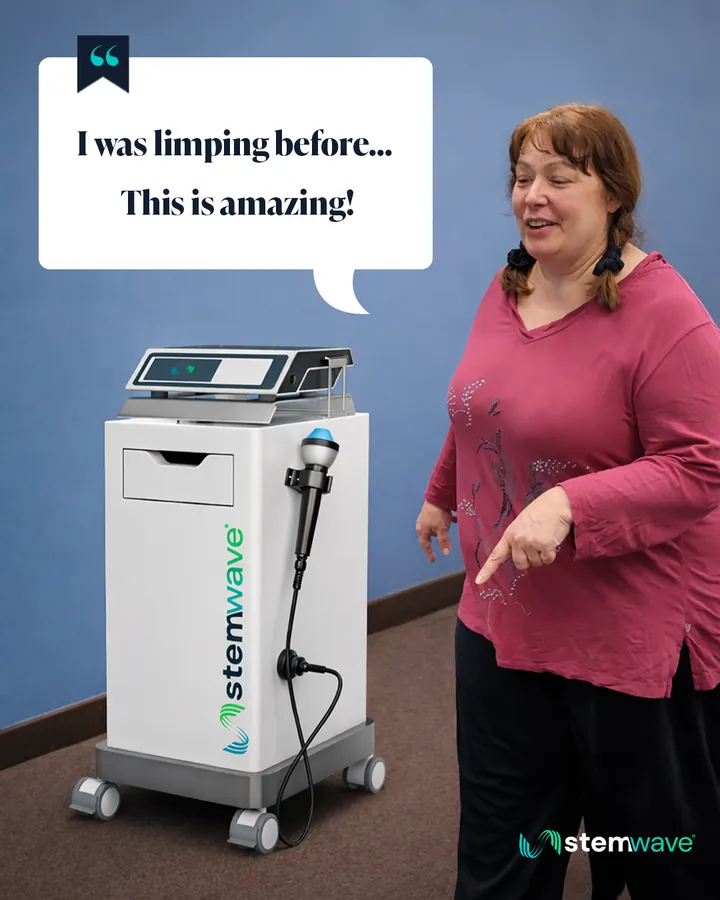
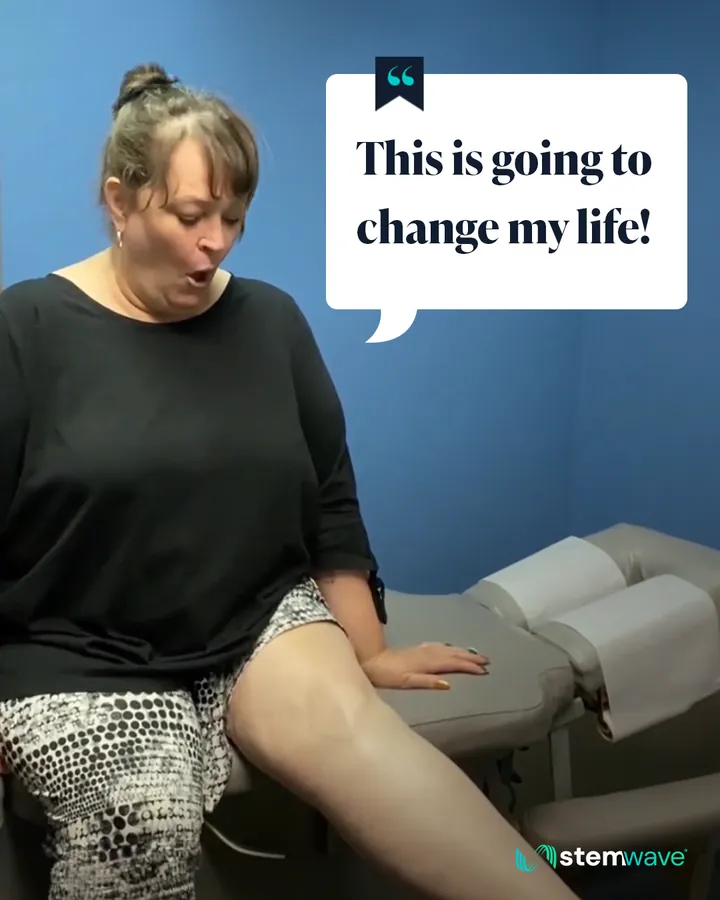
Patients shown are not Valere patients. Reactions reflect individual experiences shared with StemWave® and are not typical or guaranteed results.
What to Expect
No numbing cream, no needles, no recovery day. Most people describe the sensation as a firm, rhythmic tapping. If it ever goes above a 3 or 4 out of 10, the energy comes down. More is not better here.
01
Assessment
History, examination, and the movements that bring the pain on. If you have imaging, bring it. This is where we decide whether StemWave® belongs in your program at all.
02
Mapping
A small number of pulses across the area locates the tissue that responds. You repeat the movement, and we note what changed. Treatment covers an area, not a single spot.
03
Sessions
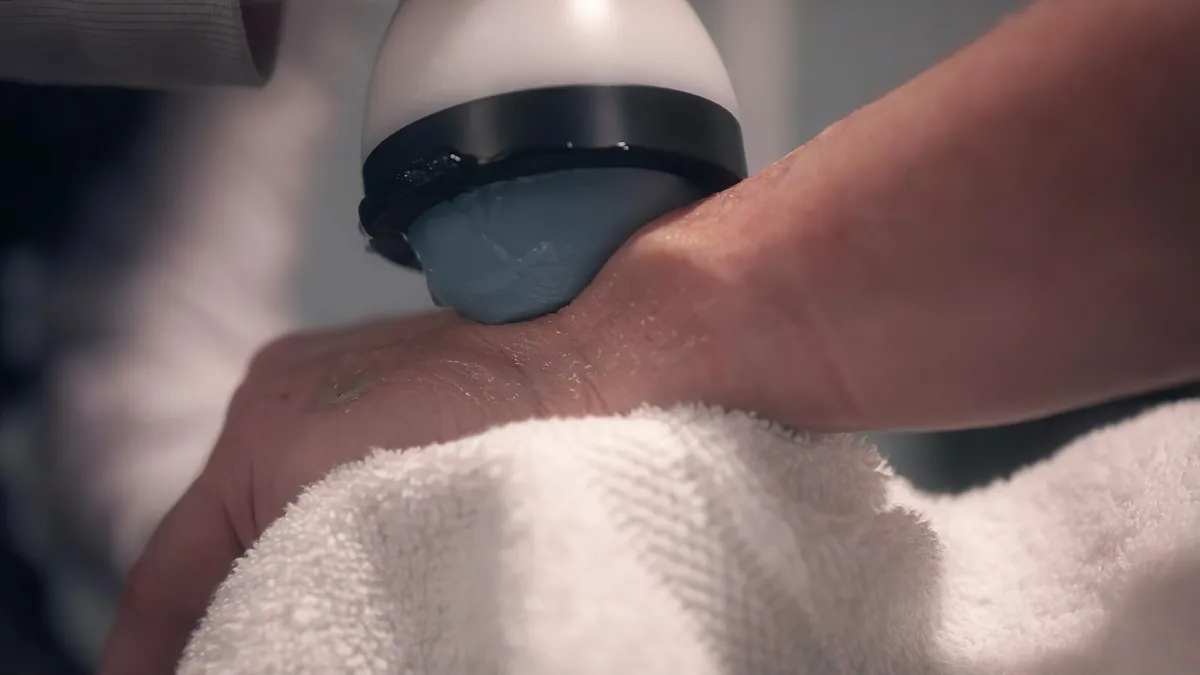
Gel, applicator, about 10 to 15 minutes. A common starting plan is twice a week for two weeks, then weekly for four to six weeks. Many care plans run 8 to 12 sessions.
04
Between sessions
Skip strenuous activity for 24 to 48 hours. Skip ice and heat, which work against the circulation response. Hydrate well. Keep taking any prescribed medication unless the prescribing doctor says otherwise.
05
Review
Progress is measured against your first visit: the same movements, the same pain scale. The plan adjusts to how you respond, not to a fixed package.
Is StemWave® Right for Me?
It suits people who want a non-surgical, drug-free option for muscle, tendon and joint-area pain, and who are willing to give it a series of sessions to build. It also pairs naturally with the rest of a Valere program.
Questions we ask first
StemWave® is safe for most people, but not everyone. These can change or delay a plan:
How It Works With the Rest
StemWave® works with the body’s own repair signaling. Your assessment decides what else supports it, and in what order.
Regenerative & Cellular
Wharton’s jelly and exosome allografts, for joints and tissue where a stronger regenerative push is part of the plan.
Explore Stem CellsRecovery
Targeted peptide protocols that may be sequenced alongside a tissue-recovery plan.
Explore PeptidesMetabolic
Less load on knees, hips and feet makes every other part of a joint program work harder for you.
Explore Weight LossHormones
Hormonal status shapes how muscle and tendon recover. It is reviewed in the same program.
Explore HRT & TRTMost people describe a firm, rhythmic tapping. Some tender spots feel sharper for a few seconds, which is useful information: it often marks the tissue that needs the work. Discomfort is kept at or below a 3 or 4 out of 10, and the energy comes down if it goes higher. No numbing is needed. Temporary soreness for a few hours to a day or two afterward is the most common side effect.
A common starting plan is twice a week for two weeks, then once a week for four to six weeks. Many care plans run 8 to 12 sessions. Long-standing problems, and joints that have degenerated, usually take longer than a fresh muscle or tendon injury. Your plan is set at your assessment and adjusted to how you respond.
Some people notice a change in how a movement feels after the first session, and many notice clear progress by the third or fourth. The regenerative effects, new circulation and tissue remodeling, build over several weeks, which is why the series matters more than any single visit.
No. Nothing is injected or removed. The name reflects research showing that focused shockwaves raise the signals that draw the body’s own repair cells, including mesenchymal stem and progenitor cells, to treated tissue. If you are interested in cellular therapy itself, that is a separate Stem Cells program, and the two can be sequenced together.
Many offices use radial pressure-wave devices, which deliver their strongest energy at the skin and spread it out from there. StemWave® is a focused electrohydraulic system: the pulse is formed by a spark in water and concentrated to a focal zone inside the tissue. Researchers consider focused and radial devices physically different, and in some areas, such as outer hip pain, focused treatment has performed better in pooled trials.
The StemWave® device is registered with the FDA as a Class I therapeutic massager, intended for the temporary relief of minor muscle aches and pains and a temporary increase in local circulation. Registration is not FDA approval or clearance. The research on this page studied shockwave therapy broadly, across many devices, and is shared so you can see what has been measured.
Go about your day. Avoid strenuous exercise for 24 to 48 hours so the tissue can respond. Skip ice and heat on the area, since both can work against the circulation response. Drink plenty of water. Keep taking any prescribed medication unless the prescribing doctor tells you otherwise.
We generally wait at least 30 days after a cortisone injection before treating that area. Tell us about any recent injections, blood thinners, implanted devices, pregnancy, or a history of cancer at your assessment, since each can change or delay a plan.
StemWave® is planned as part of your program rather than sold by the session from a menu, so pricing is reviewed with you at your assessment once we know the area and the number of sessions that makes sense.
StemWave® is a registered trademark of its owner and is used here with the manufacturer’s materials. The StemWave® device is registered with the FDA as a Class I therapeutic massager, intended for the temporary relief of minor muscle aches and pains and a temporary increase in local blood circulation. Registration and listing do not denote FDA approval or clearance. The research summarized on this page studied extracorporeal shockwave therapy across a range of devices, energy levels and protocols; it is shared for education, is not specific to the StemWave® device, and does not describe Valere patient outcomes. Patient images and video are supplied by StemWave® and do not show Valere patients. Individual results vary and are not guaranteed. This page is not medical advice. Services are limited to qualified candidates as determined by evaluation; consult your primary care provider before starting any program.
Your assessment covers your history, the movements that hurt, and whether StemWave® belongs in your program. Sometimes the honest answer is that something else would serve you better.
Private · By appointment only · River Oaks, Houston