Stem Cells and Skin Rejuvenation: How Exosome-Derived Biologics Support Cellular Renewal
Of all the areas where cellular biologics are used, skin is the one where the science and the marketing have drifted furthest apart in opposite directions — and, usefully, also the one where the human evidence is strongest. That combination makes an honest account worth reading. There is real clinical data here, and there is also a great deal of overstatement layered on top of it, and telling the two apart is the point of this article.
What follows is what exosome-derived biologics actually do at the cellular level in skin, what the evidence supports, how to think accurately about the phrase biological age reversal, and who is a reasonable candidate. For the broader scientific and regulatory context on these biologics, the pillar article on stem cells in regenerative medicine covers the field as a whole.
What happens to skin at the cellular level with age
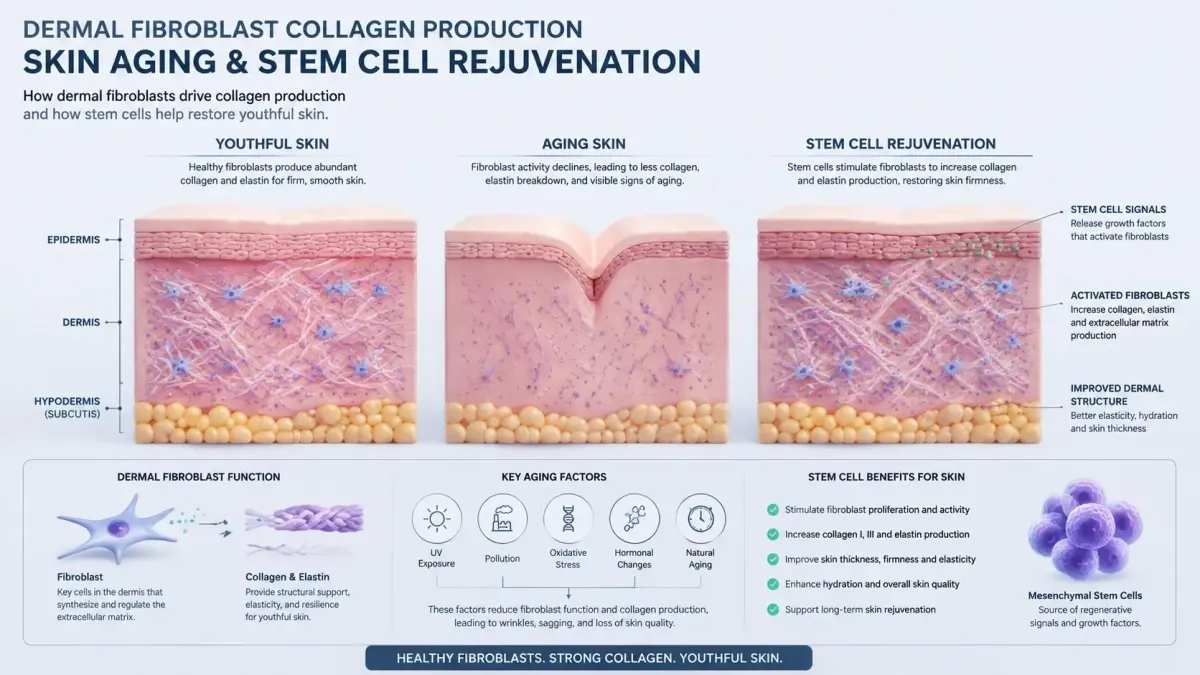
Skin aging is not only a surface phenomenon, though that is where you notice it. Beneath the surface, the cellular machinery that keeps skin firm and resilient slows down. The fibroblasts — the cells in the dermis responsible for producing collagen and elastin — become less active with age. Collagen production declines. Existing collagen breaks down faster than it is replaced, partly through the activity of enzymes called matrix metalloproteinases that increase with age and sun exposure.
The visible results — reduced firmness, fine lines, loss of elasticity, uneven tone — are the surface expression of this slowdown in cellular activity. A skincare product that sits on the surface can improve appearance, but it does not change the behavior of the fibroblasts below. Any approach aiming to influence the aging process itself, rather than its appearance, has to reach the cellular level where that process is actually occurring.
How exosome signaling supports collagen and cellular renewal
Exosomes are nanoscale vesicles that carry biological signals between cells. In the context of skin, the mechanism of interest is their interaction with the dermal fibroblasts — the collagen-producing cells whose activity declines with age.
The research indicates that exosomes derived from mesenchymal stem cells can signal fibroblasts to increase their production of collagen and elastin, support the cellular renewal processes that slow with age, and reduce some of the oxidative stress and enzyme activity that accelerate collagen breakdown. In other words, the mechanism is one of stimulating the skin's own cells to behave more like younger, more active cells — not of adding a foreign material to the skin, and not of resurfacing the surface alone.
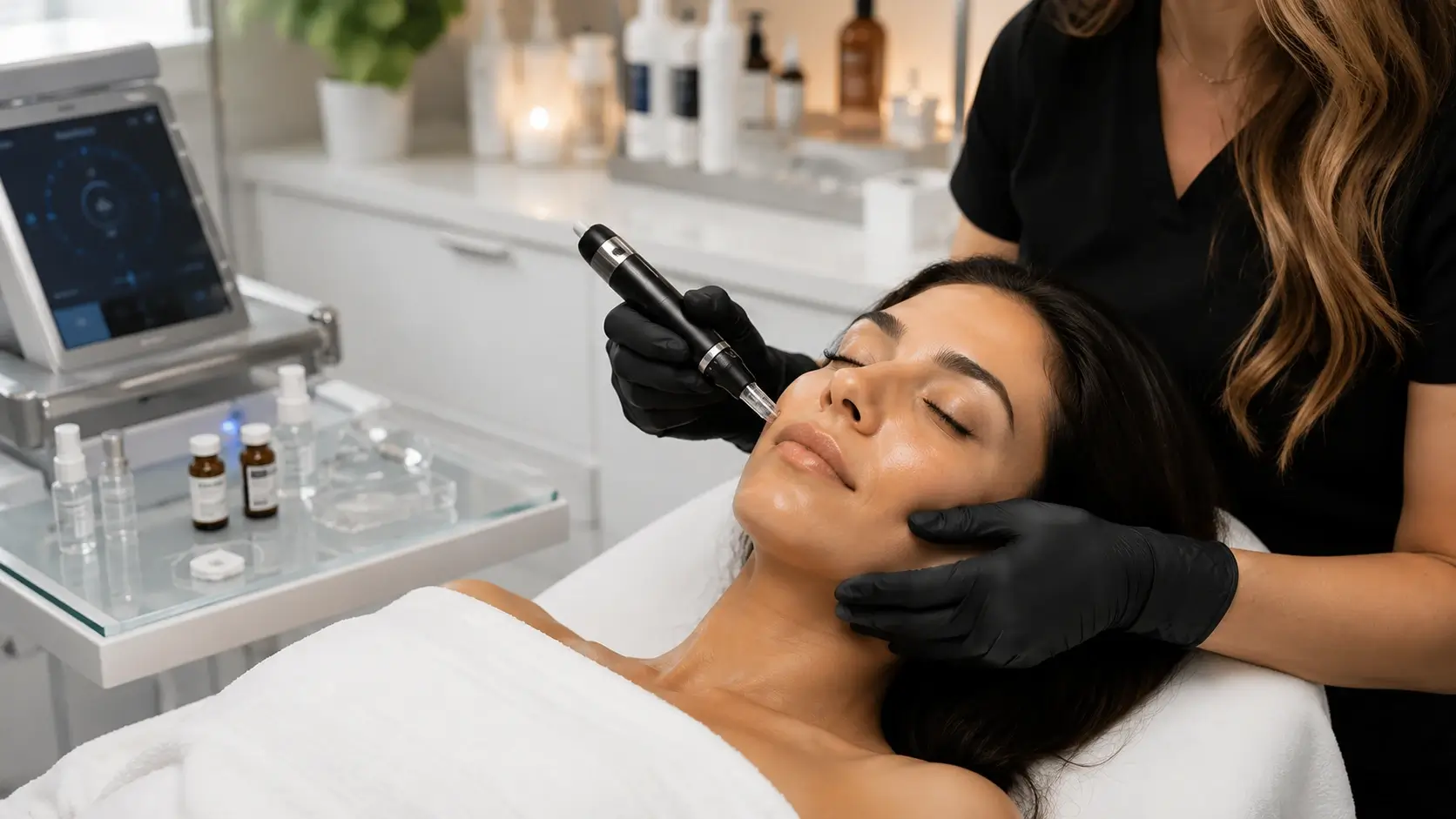
Because the target is the dermis, delivery matters. Exosome biologics for skin are frequently paired with microneedling, which creates controlled microchannels that allow the biologic to reach the dermal layer where the fibroblasts live. This delivery method is itself a medical procedure, not a cosmetic surface application — a distinction that matters both clinically and, as addressed below, from a regulatory standpoint.
What the evidence actually shows
This is where skin genuinely differs from some other biologic applications: there is meaningful human clinical data, not only laboratory and preclinical work. It is worth understanding both what that data shows and where its limits are.
A 2023 prospective, randomized, split-face study compared adipose stem cell-derived exosomes plus microneedling against saline plus microneedling in the same patients, and found statistically significant advantages on the exosome-treated side across measures of wrinkle roughness, skin elasticity, hydration, and pigmentation, with histological analysis confirming greater collagen density. Because it was split-face — each person serving as their own control — the design is particularly informative. A 2026 systematic review of exosome therapies in skin reached a consistent overall conclusion: these approaches improve elasticity, reduce wrinkle depth, enhance hydration, and modulate pigmentation, supported by molecular evidence of increased collagen synthesis.
The same systematic review is equally clear about the limits, and honesty requires stating them: the studies are still relatively small, follow-up is generally short, and further standardized clinical trials with larger cohorts and longer follow-up are needed to confirm efficacy and long-term safety. The evidence supports genuine, measurable effects. It does not yet support claims of dramatic or permanent transformation. Both halves of that sentence are true, and a practice worth trusting will give you both.
How to think accurately about "biological age reversal"
The phrase biological age reversal appears constantly in the marketing of these treatments, and it is worth defining precisely, because used loosely it promises something the science does not.
What the evidence describes is this: exosome signaling can prompt aged fibroblasts to increase collagen production and behave, in specific and measurable ways, more like younger cells. In that narrow and literal sense, some markers of cellular aging can shift in a more youthful direction. That is a real and defensible statement.
What the phrase does not mean is that the skin is returned to its condition decades earlier, that the effect is permanent, or that aging has been undone. The measurable improvements are meaningful but bounded, and they require maintenance because the underlying aging process continues. Used precisely, biological age reversal refers to specific cellular markers moving favorably. Used as a marketing promise of turning back the clock, it overstates the science. The precise version is the honest one, and it is the only version worth taking seriously.
Why physician-supervised delivery differs from a cosmetic application
There is a meaningful difference between a biologic delivered as part of a physician-guided clinical program and the same category of product used as a casual add-on to a cosmetic service. The difference is not marketing — it is clinical and regulatory.
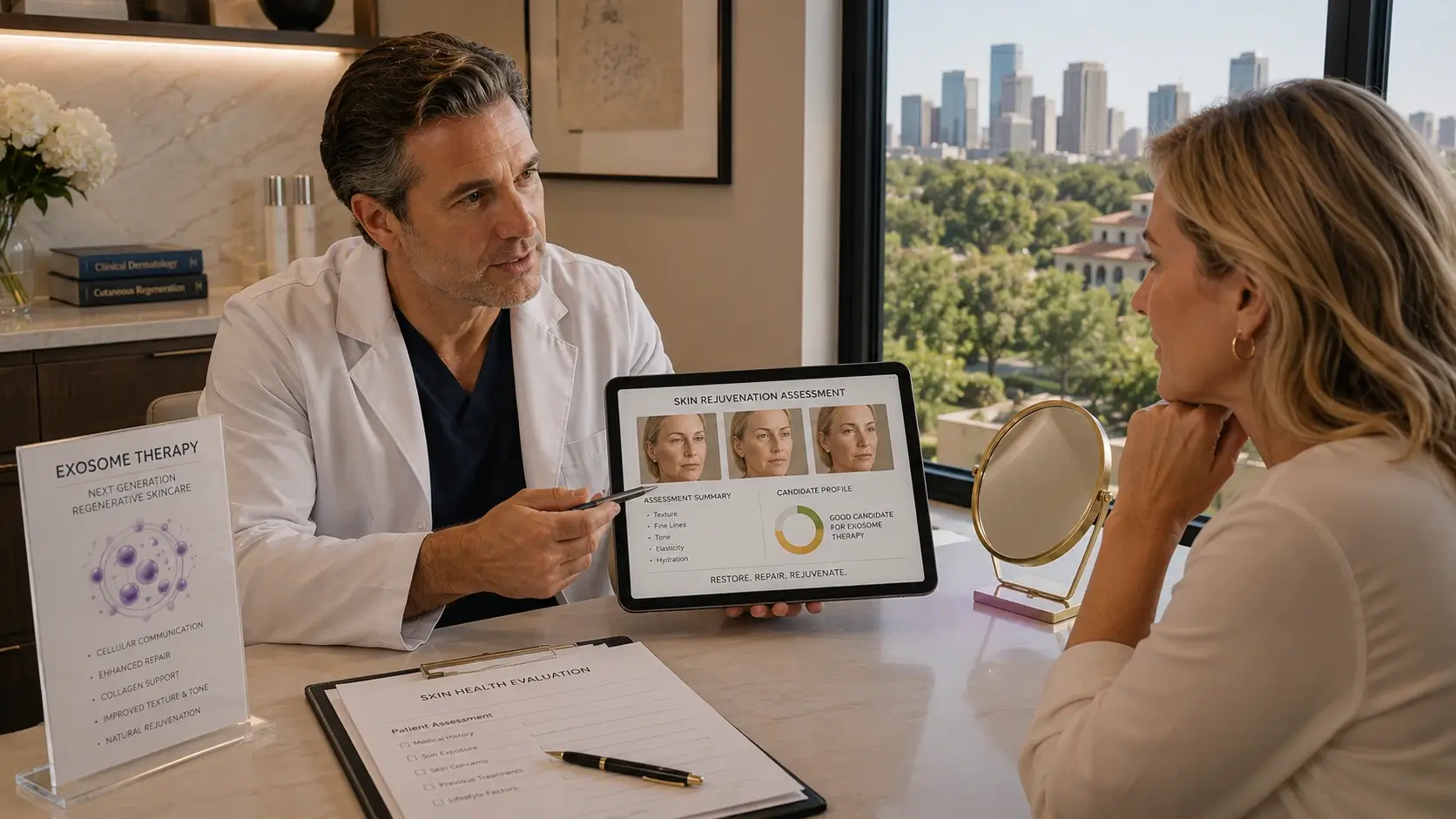
When an exosome biologic is delivered into the dermis via microneedling, a biologic product is being administered and the skin barrier is being intentionally breached. That is a medical procedure with real considerations: the sourcing and quality of the biologic, appropriate sterile technique, candidacy, and physician oversight. Treating it as though it were the same as applying a serum understates what is actually happening. At Valere, this is handled as the clinical procedure it is, within the skin vitality and dermal renewal program at valereregenerative.com/offerings/skin-vitality-dermal-renewal, with the assessment establishing candidacy and honest expectations first.
How the FDA framework applies to aesthetic biologics
The regulatory reality here is specific and worth stating plainly. The FDA regulates exosome and cellular biologic products and requires the manufacturing laboratories to be registered and compliant. There are no FDA-approved exosome products for aesthetic use, and the FDA has been explicit that applying an unapproved biologic onto microneedled skin constitutes administering that product — not a cosmetic application exempt from oversight.
When exosome biologics are used for skin, they are used off-label, sourced from FDA-registered laboratories, and administered under physician supervision. All three hold at once. This is the same off-label structure found across much of medicine, but the regulatory attention on aesthetic exosome products makes compliant sourcing and honest framing especially important. Valere sources exclusively from FDA-registered, compliant laboratories and describes the evidence accurately rather than implying approval or certainty that does not exist.
Frequently Asked Questions
Does exosome skin therapy actually work? The human evidence is stronger here than in some other areas — including randomized split-face studies showing measurable improvements in elasticity, wrinkles, hydration, and collagen density. The effects are real but bounded, the studies are still relatively small, and results require maintenance. It is reasonable to consider with accurate expectations.
Is this the same as a stem cell facial at a spa? Not necessarily. What matters is whether a compliantly sourced biologic is administered as a clinical procedure under physician supervision, or whether an unregulated product is applied as a cosmetic add-on. The distinction is both clinical and regulatory, and it is worth asking about directly.
How long do results last? They are not permanent. The underlying aging process continues, so maintaining results requires ongoing care. Any source promising permanent results is overstating what the biology supports.
Is it covered by insurance? No. Aesthetic biologic approaches are elective and off-label, so they are private-pay.
The starting point
Among cellular biologic applications, skin rejuvenation has some of the most encouraging human evidence — measurable improvements in collagen, elasticity, and texture, delivered through a genuine biological mechanism. It also attracts some of the most overstated marketing, which is exactly why accurate framing matters. Real effects, bounded and requiring maintenance, evaluated honestly for your specific skin.
The way to find out what is realistic for you is an assessment. Reserve yours atvalereregenerative.com/assessment.