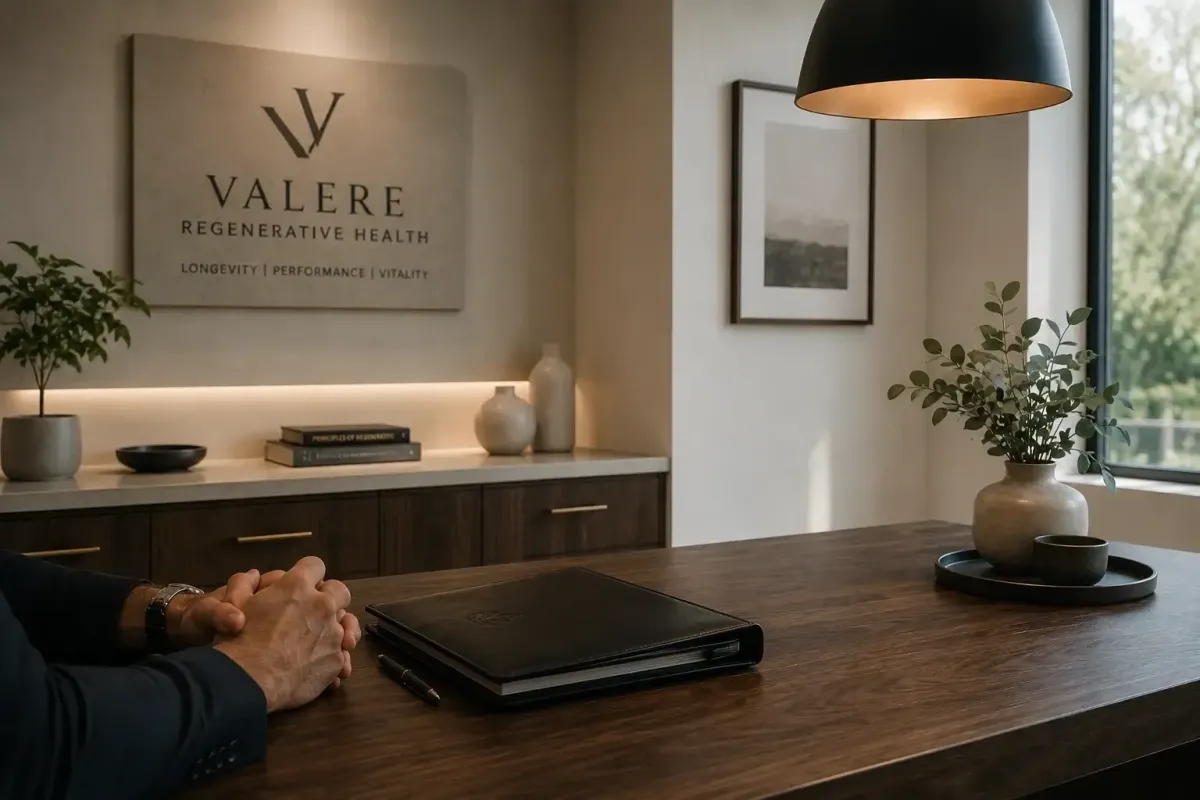
The Infrastructure Behind the Practice
Building a physician-led regenerative health program at the standard Valere operates at is not primarily a clinical challenge. The clinical part — the assessment process, the program design, the precision of the interventions — I can account for. What requires a different kind of expertise is the infrastructure that makes the clinical practice function: sourcing the right laboratory relationships, identifying and credentialing the right clinical staff, establishing the operational systems that allow a concierge practice to actually run at the level it promises.
That infrastructure is invisible to the Valerian who comes through the door. It should be. But it exists, and it matters, and building it well is not accidental.
To build it correctly, I needed a partner who understands this specific category of medicine and the operational requirements it carries. That partner is Altos Consulting Group — a consulting firm that works with physicians and entrepreneurs entering the regenerative medicine space, connecting practices with the laboratory relationships, clinical staffing, and operational education that programs at this level require.
Why Operational Infrastructure Is a Clinical Question
I want to be direct about something. Altos is not a clinical partner. They do not design treatment protocols or influence how Valere physicians assess and serve Valerians. The clinical decisions at Valere belong to the physician in the room. They always will.
What Altos shapes is the operational context in which that clinical work happens. The sourcing of biological materials and laboratory relationships at the right standard. The identification of clinical support staff who understand what a concierge regenerative program actually requires. The systems and education that allow a practice to operate consistently at the level the Valerian expects every time they engage with it.
If any of those elements are wrong — if sourcing is compromised, if staffing doesn't meet the program's demands, if the operational systems create friction where there should be none — the clinical work is harder than it needs to be. The standard slips in ways that are difficult to trace and therefore difficult to correct. Getting the operational foundation right is not background work. It is prerequisite work.
That is what this partnership exists to do. If you want to understand more about how Valere is built to operate — the program structure and the thinking behind it — the how it works page at valereregenerative.com/how-it-works covers that in detail.
What This Means for the Valerian
The short answer is: nothing changes about what you experience. The program model, the physician-led assessment, the clinical standards that define every Valere offering at valereregenerative.com/offerings — none of that is affected by who handles the operational side. That is the point.
What a well-built operational foundation provides is consistency. A Valerian who begins a program at Valere should encounter the same standard of care, the same quality of materials, the same level of operational precision at month six that they did on the first day. That consistency is not automatic. It is built, maintained, and — when it needs to be — corrected. Altos is the partner I trust to hold that operational standard alongside the clinical one.
The Bar Is the Same for Every Partner
Valere applies one standard to everything connected to this practice. To the clinical approach. To the program design. To the way Valerians are spoken to and served. The same standard applies to who we work with operationally.
Altos met it. That is the reason they are the partner.
If you are ready to find out what a Valere program looks like for your specific situation, the starting point is the assessment. Reserve yours at valereregenerative.com/assessment →