How to Keep Playing Golf with Knee Pain: The Regenerative Approach in River Oaks
How to Keep Playing Golf with Knee Pain: The Regenerative Approach in River Oaks
Medical oversight: Micah Craig, MD, Medical Director, Valere Regenerative
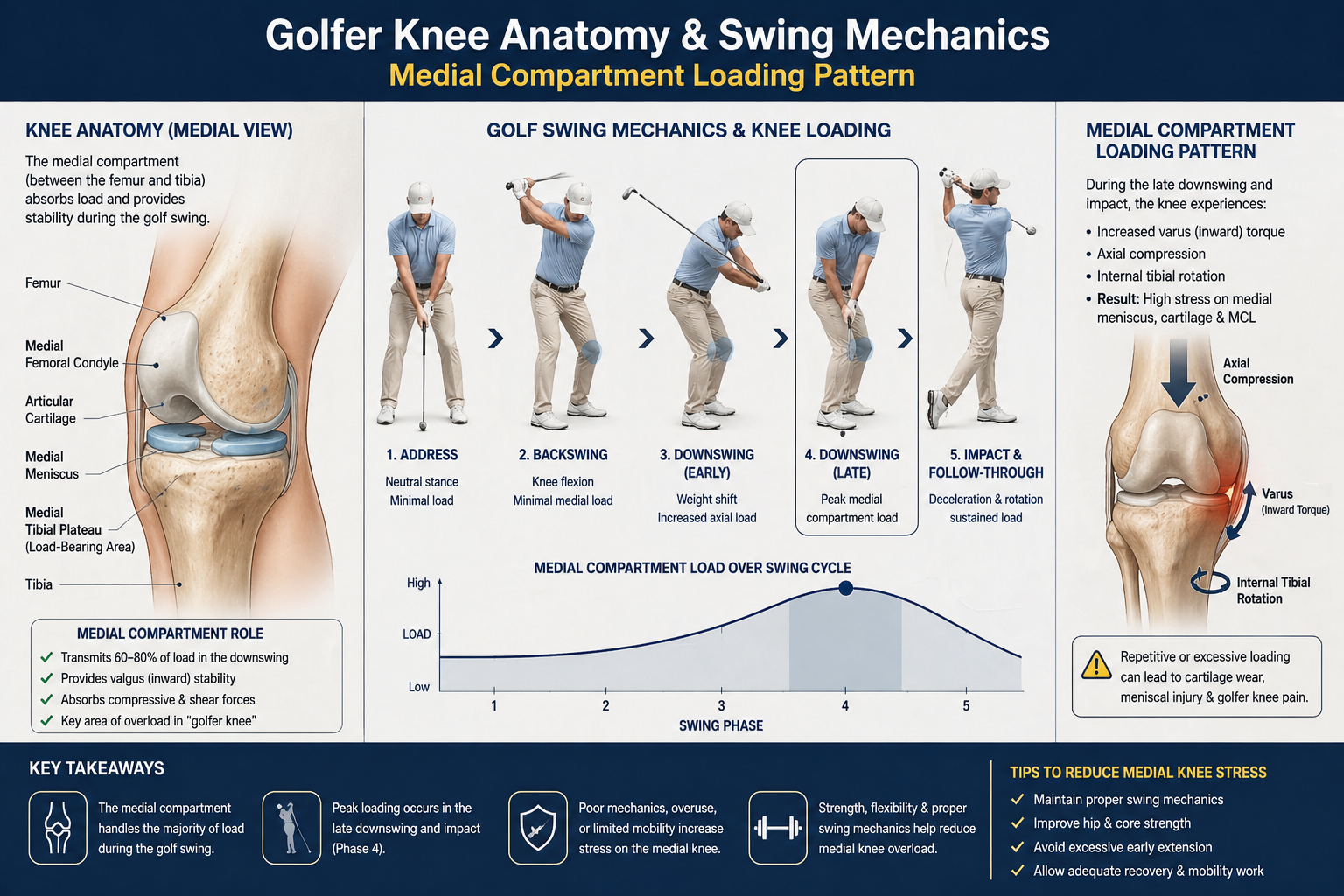
Golf is not a gentle sport for the knee. The mechanics of the swing — the rotational load through the medial compartment at impact, the lateral forces during weight transfer through the downswing, the accumulated impact from walking eighteen holes on terrain that demands constant micro-adjustments — place specific and repetitive demands on the knee joint that, over years of regular play at the frequency serious golfers maintain, create a biological environment that is no longer self-managing.
For the patient who has played golf for twenty or thirty years and intends to play for twenty or thirty more, the knee pain that begins to accompany the round is not a minor inconvenience to be managed. It is the beginning of a decision process that, if not addressed with the right clinical framework, ends in one of two places: surgery, or giving up the game. The patient who refuses both of those outcomes needs a third option. This article explains what it looks like.
What Golf Actually Does to the Knee Over Time
The golf swing produces a specific and distinctive mechanical pattern in the knee. The lead knee — left for a right-handed golfer — bears a significant rotational load through the downswing and impact phase. This generates shear stress on the medial structures: the medial meniscus, the medial collateral ligament complex, and the articular cartilage on the medial femoral condyle. Over time, this pattern of loading — repeated thousands of times a year in the regular golfer — accumulates.
The articular cartilage thins progressively as the biological repair processes that maintain it are outpaced by the accumulated stress. The meniscus develops degenerative changes — tears, fraying, loss of the cushioning capacity that distributes load across the joint surface. The inflammatory environment of the joint shifts from one characterized by normal biological activity to one characterized by chronic low-grade inflammation that drives further tissue deterioration.
When imaging is eventually obtained — typically after the pain becomes significant enough that the patient seeks a formal evaluation — the findings are described as degenerative: medial compartment narrowing, meniscal changes, articular cartilage wear. The conventional clinical response to these findings, once the pain becomes functionally limiting, is the standard pathway: anti-inflammatories, cortisone, physical therapy, and eventually a conversation about replacement surgery.
What the imaging findings do not capture is the degree to which the biological environment of the joint — the inflammatory picture, the cellular activity, the growth factor availability, the tissue quality — can still respond meaningfully to the right biological intervention. The structural change is real. Whether that biology can still respond is a separate question, and it is the one the regenerative assessment is designed to ask.
What a Regenerative Approach to Golf Knee Pain Involves
The regenerative approach to knee pain in the golfer at Valere begins with a genuine clinical assessment. This is not simply a review of the existing imaging. It is a full clinical evaluation that incorporates the imaging, the physical examination of the specific knee, the pattern of the pain and how it relates to the demands of the golf game, the degree of functional limitation, and what the biological environment of the joint actually looks like when evaluated with the depth the program requires.
From that assessment, the program is built. For most golfers presenting with medial compartment knee pain of the type described above, the program centers on exosome therapy delivered under ultrasound guidance to the specific structures the assessment identifies as the primary contributors to the pain and dysfunction, often paired with StemWave. Exosomes are tiny vesicles that carry signaling molecules involved in the body's own repair processes; how much a given knee responds varies from person to person. Exosome therapy for orthopedic cases typically starts at $2,250, depending on the case.
The delivery under ultrasound guidance is not a minor technical detail — it is the clinical standard for placing the preparation precisely where the assessment indicates. Image guidance is a meaningful difference in technique compared with a palpation-guided injection.
The program includes a defined monitoring period following the initial intervention, a follow-up evaluation of the tissue response, and a determination of whether additional intervention, dosing adjustment, or a maintenance protocol is appropriate. The golfer who goes through this program is not simply receiving an injection. They are receiving a clinical program designed around their specific joint, their specific pattern of use, and their specific goal.
The joint renewal and mobility program at valereregenerative.com/offerings/joint-renewal-mobility-longevity provides a complete overview of the approach and how it is structured.

Realistic Expectations for the Golfer
The goals of a well-designed regenerative knee program for a golfer typically include less pain during rounds, improvement in how the knee responds to the rotational demands of the swing, a reduction in the stiffness and post-round soreness that had become a regular feature of the game, and over time, the ability to play with the frequency and the confidence that the pain had begun to erode.
These outcomes are goals, not guarantees. They depend on the specific clinical picture, the degree of structural change, the biological health and age of the patient, and how the program is structured and delivered. Whether they are realistic for you is what the assessment is designed to determine.
What the program does not promise is restoration of the joint to its condition twenty years ago. The structural changes that imaging shows are real and they are not reversed by any biological intervention currently available. What the program addresses is the biological environment of the joint — the inflammatory picture, the tissue quality, the cellular activity — that determines how much functional capacity remains and how much pain it generates. For the golfer who wants to keep playing, that is the clinically honest starting point.
Reserve your assessment at valereregenerative.com/assessment. Come in with the imaging you have, a clear description of the pattern of your pain, and the goal you are working toward. That is where the program begins.
What to Do Before the Season Starts
The golfer who brings their knee to Valere in the middle of a season they are unwilling to interrupt is in a different clinical position than the one who comes in during the off-season with time to allow the biological program to work before the next round of heavy play.
Both situations are addressable. But the golfer who manages the off-season with the same intentionality they apply to their equipment, their swing, and their conditioning is the one who shows up to the season in the best possible biological position. If your knee has been bothering you and the season is approaching, the assessment at valereregenerative.com/assessment is the right next step now rather than when the pain becomes unavoidable.
The knee that you play through because the season is ongoing is a knee that accumulates load without recovery. A brief investment in the assessment — understanding the clinical picture clearly before the season is fully underway — gives the program the information it needs to work with your schedule rather than against it.
Medical disclaimer: This article is for general education only and is not medical advice. Reading it does not create a doctor–patient relationship. The treatments discussed are not right for everyone, individual results vary and are not guaranteed, and some therapies mentioned may be used off-label or are not FDA-approved for the uses described. Please talk with a licensed physician about your own health before starting any treatment.