
Hormone Optimization in Houston: What a Program-Led Approach Looks Like — and Who It Is Actually For
Hormone Optimization in Houston: What a Program-Led Approach Looks Like — and Who It Is Actually For
Medical oversight: Micah Craig, MD, Medical Director, Valere Regenerative
The conversation about hormones tends to arrive through a specific and recognizable set of experiences. Energy that is no longer reliable — not dramatically depleted, but qualitatively different from what it was five years ago, requiring more effort to produce the same output that used to arrive naturally. A body composition that has shifted despite no meaningful change in the diet and training approach that maintained it for twenty years. A mental sharpness that is still present but fractionally less consistent — still capable of everything the patient requires, but without the effortless quality they have been used to and that they miss. A libido that has stepped quietly back. Sleep that technically happens but does not restore the way it once did.
Any one of these individually might be attributed to stress, to a demanding period, to something temporary that will resolve on its own. Together, and with the persistence that eventually brings a serious person to investigate them seriously, they form a pattern. That pattern points to a hormonal environment that has shifted. And for a significant number of high-performing adults in Houston, that shift has not been identified or addressed by the conventional medical system in a way that is equal to the seriousness with which the patient lives their life.
Hormone optimization is not a new category of care. What has changed over the past decade is the sophistication of the clinical approach — the degree to which a program-led model, built on a genuine comprehensive assessment of the individual's hormonal picture and sustained through ongoing monitoring and intelligent adjustment, offers something a prescription alone does not.
Why Routine Medicine Often Misses This
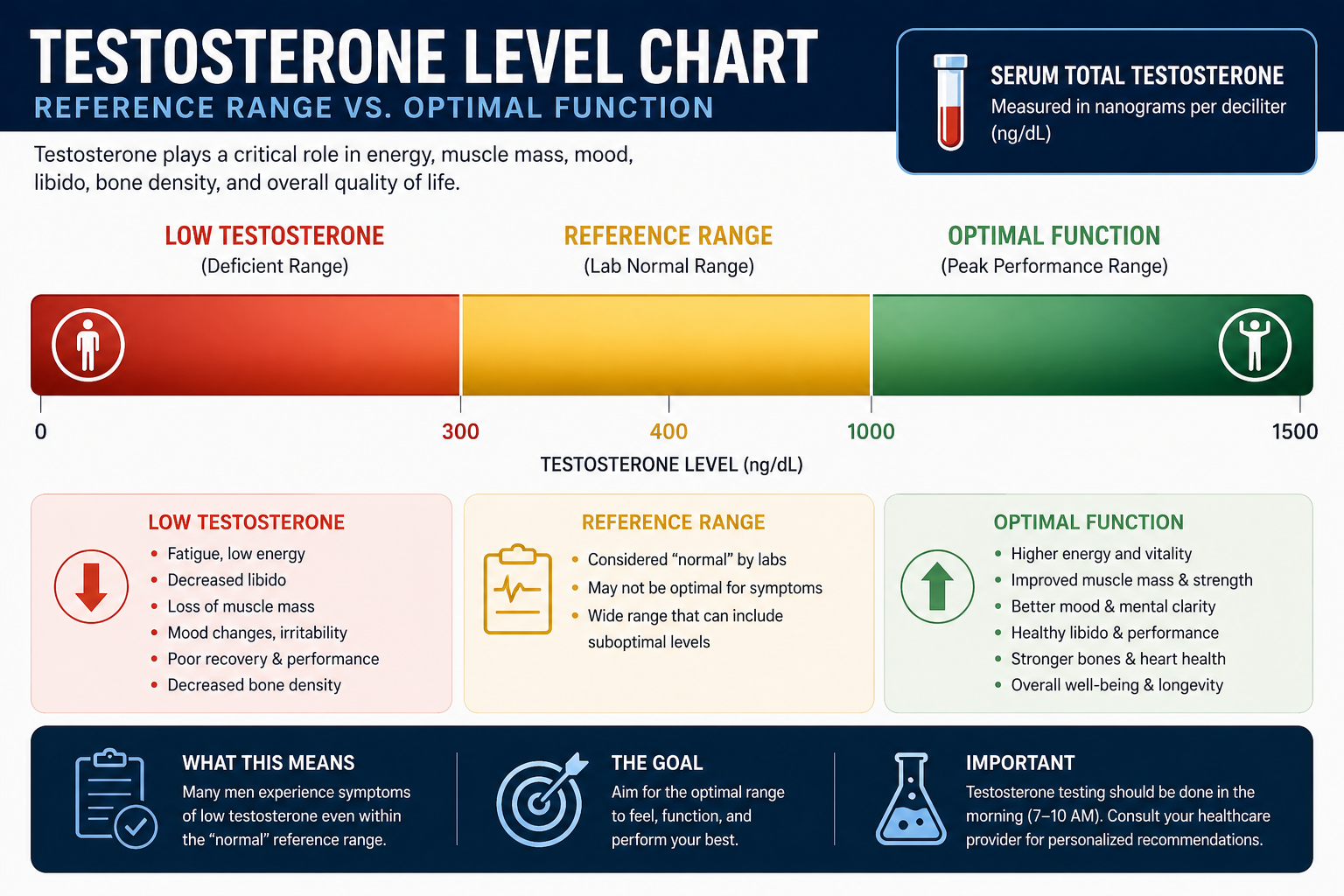
Standard medical evaluation of hormones is designed around reference ranges built to identify clinical pathology — hypogonadism, hypothyroidism, Addison's disease — conditions defined by crossing a threshold of significant dysfunction. The reference range is a threshold for disease, not a measure of optimal function. This is not a flaw in the design; it is the design. The standard system was built to catch pathology, not to optimize biology.
A man whose free testosterone sits at the 15th percentile of the reference range — well within normal, not flagged, not addressed — will be told his results are fine. He will also be experiencing the energy, body composition, cognitive, and libido effects that are consistent with that level of hormonal function and that are materially different from what he experienced when his testosterone was at the 55th percentile. Both things are simultaneously true: the result is normal, and the person is experiencing the meaningful effects of hormonal decline. The conventional system has no framework for caring about the second fact if the first one is in range.
The same structural problem applies in women navigating perimenopause and menopause. The hormonal transition is real, the symptoms are real, and the conventional response — reassurance that what is being experienced is expected and age-appropriate, or an intervention designed to manage symptoms rather than optimize the biological environment — is insufficient for the patient who has maintained high standards across everything else she does and who is not interested in accepting insufficient.
Hormone optimization at Valere begins from a different premise entirely. The goal is not to rule out pathology. The goal is to identify the hormonal environment in which this specific person functions at their highest level — and build a program that establishes and sustains it.
What the Program Involves
A Comprehensive Assessment, Not a Standard Panel
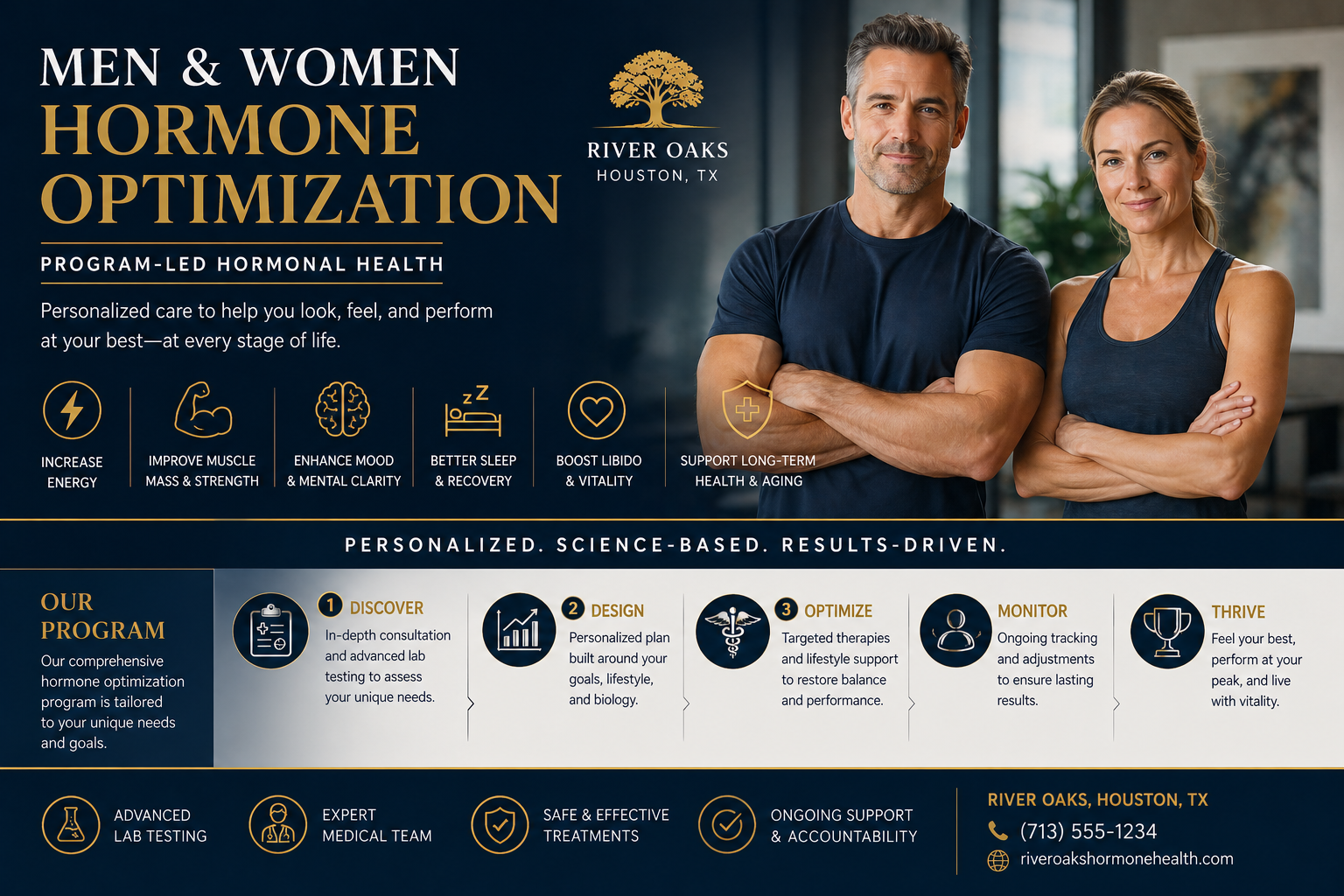
The assessment at Valere evaluates the full hormonal picture rather than the headline numbers. For men, this includes free and total testosterone, SHBG, estradiol, DHEA-S, thyroid function including free T3 and T4, LH, FSH, and the metabolic markers that provide context for the hormonal picture. For women, the assessment includes the full reproductive hormonal picture, thyroid function, and the markers that together describe the hormonal environment at the specific stage of the transition.
Equally important is the clinical consultation component of the assessment — the patient's symptoms, their history with previous hormonal evaluation and any interventions, the lifestyle context that affects hormonal production and clearance, and the specific functional goals they bring to the program. The panel informs the clinical picture. The clinical consultation provides the context that gives the numbers their meaning. The program is built from both.
Ongoing Monitoring Is Not Optional
A hormonal health program involves ongoing clinical engagement — not a prescription written at the initial consultation and reviewed at a six-month follow-up. The monitoring is built into the program from the beginning, with defined intervals for evaluation of the hormonal response and clinical judgment applied to what the response shows.
This monitoring matters because hormonal response is individual. The patient's biology adapts to the intervention over time. The starting dose that was appropriate at month one may need adjustment at month three as the body's response evolves. The delivery method that worked initially may be refined. The downstream effects of the hormonal intervention on the metabolic picture, the sleep architecture, and the body composition are tracked and incorporated into the ongoing clinical decision-making.
For men, the program typically means testosterone optimization — targeting free and total testosterone levels that fit the patient's symptoms and goals, with monitoring of downstream effects including red blood cell parameters, prostate health, and cardiovascular markers that the intervention can affect. The details of how this is structured are outlined at valereregenerative.com/offerings/hormonal-health-vitality/mens-hormonal-health.
For women, the hormonal picture requires even more dynamic monitoring — the estrogen-progesterone-testosterone balance shifts through perimenopause in ways that are individually variable, and the program that is appropriate in year one of the transition may need meaningful adjustment in year two and three. The women's hormonal health program at valereregenerative.com/offerings/hormonal-health-vitality/womens-hormonal-health addresses this clinical complexity with the nuance it requires.

Replacement versus Optimization — A Meaningful Distinction
Hormone replacement addresses deficiency defined by a reference range threshold. Hormone optimization addresses the question of where this specific person functions at their best — and builds a program designed to establish and sustain that environment. These goals are related but they are not identical, and the clinical approach required to achieve them differs in important ways.
Replacement is a binary clinical decision: are you below the threshold? If yes, supplement to bring the level into range. Optimization is a nuanced and ongoing clinical process: what hormonal environment best fits this patient's specific biology, goals, and life demands? The answer is not found in a reference range. It is found in a comprehensive assessment, in the ongoing clinical picture the monitoring process reveals, and in the intelligent adjustment of the program as the patient's biology responds and evolves.
The patient who is not severely deficient — whose labs are not dramatically abnormal — but who recognizes from their own experience that their hormonal environment has shifted in ways that are affecting their quality of life, performance, and sense of themselves as a capable, vital person needs the optimization approach, not the replacement threshold model. Valere is built to deliver it.
The Connection to the Bigger Health Picture
Hormones do not operate in isolation from the rest of the patient's biology, and the program model at Valere holds these connections in view simultaneously. Testosterone in men affects muscle maintenance, fat distribution, insulin sensitivity, inflammatory tone, bone density, and cardiovascular function — all simultaneously, all clinically relevant to the longevity picture. Estrogen and progesterone in women affect cognition, sleep architecture, cardiovascular function, skin quality, and metabolic efficiency in ways that connect the hormonal program to multiple other dimensions of health.
The patient who begins a hormonal optimization program at Valere and is also addressing metabolic health through the program at valereregenerative.com/offerings/metabolic-health-body-composition will find that the hormonal and metabolic programs are designed to work together rather than in isolation. This is the clinical logic of the integrated program model: the connections are real, and the program is built to hold them in view together.
The starting point for every dimension of the program is the assessment. For patients ready to find out what their hormonal picture actually looks like and what a program built around it can accomplish, reserve your assessment at valereregenerative.com/assessment.
The Sexual Health Dimension
The patient who experiences changes in libido, sexual function, and sexual confidence as part of the broader shift in their hormonal picture often hesitates to raise it — not because it is not significant, but because the clinical systems they have navigated have not created a framework in which this conversation feels clinical rather than personal.
At Valere, sexual health is a legitimate clinical dimension of the hormonal program — not a separate sensitive topic to be handled carefully, but a functional variable that the hormonal environment directly affects and that a well-designed hormonal program can address. For men, low testosterone can be one factor in changes to libido and sexual function, and it is worth evaluating. For women, estrogen, progesterone, and testosterone all play a role in libido and comfort through the hormonal transition. Whether hormone therapy is appropriate, and what it can realistically address, is a physician's call.
The sexual health offerings at valereregenerative.com/offerings/sexual-health-wellness and its subpages address this dimension specifically — for men at /offerings/sexual-health-wellness/mens-sexual-wellness and for women at /offerings/sexual-health-wellness/womens-sexual-wellness. For many patients, this is a dimension of health that a well-designed hormonal program addresses as part of restoring the full quality of the life they have built.
Who a Hormonal Optimization Program Is For
The patients best suited to a structured hormonal health program are adults between roughly 40 and 70 who have noticed a meaningful, persistent change in energy, body composition, cognitive function, mood, sleep quality, or sexual health that has not been adequately addressed by the conventional system.
They have often had their hormones evaluated and been told their numbers are within range while continuing to experience symptoms that are inconsistent with how they have always functioned and with how they intend to continue functioning. They are not looking for reassurance that their experience is normal. They are looking for a clinical partner who takes their functional goals as seriously as they do.
The hormonal health and vitality overview at valereregenerative.com/offerings/hormonal-health-vitality provides a complete picture. The starting point is the assessment at valereregenerative.com/assessment.
The patient who decides to address hormonal health while the biological conditions are still strong — before the decline has progressed to the point where optimization is working against more advanced changes — is making a decision that compound biological dividends over time. The assessment is the place to understand what that looks like for your specific biology. Reserve yours at valereregenerative.com/assessment. That program starts with a single assessment.
Medical disclaimer: This article is for general education only and is not medical advice. Reading it does not create a doctor–patient relationship. The treatments discussed are not right for everyone, individual results vary and are not guaranteed, and some therapies mentioned may be used off-label or are not FDA-approved for the uses described. Please talk with a licensed physician about your own health before starting any treatment.